For many business owners, planning for the year ahead starts long before January. With September marking the start of budgeting season for many businesses, now is the time to evaluate where the business stands, consider opportunities for growth and determine what resources will be needed to achieve those goals in 2027.
Having a budget in place can help business owners make important decisions about where to spend, when to invest and how to plan for growth while also preparing for unexpected changes along the way.
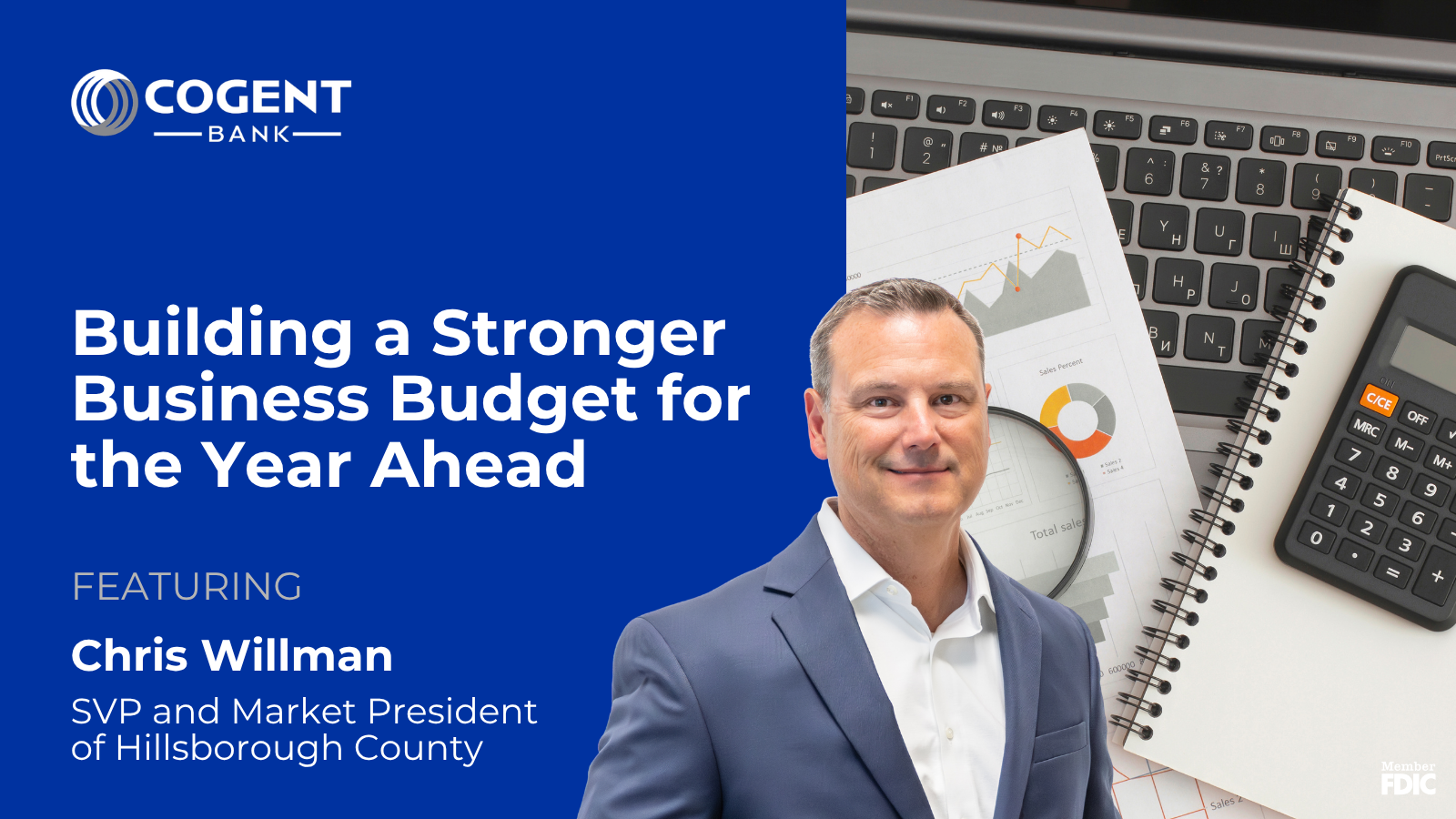
For Chris Willman, Senior Vice President and Market President of Hillsborough County at Cogent Bank, effective planning starts with understanding growth expectations and cash flow needs.
With more than 25 years of experience in banking, Chris has worked closely with businesses navigating growth and changes in the economy. He has also experienced many of these decisions firsthand as a former business owner, giving him a unique understanding of the responsibilities that come with managing payroll, raising capital, securing financing and investing in a company’s future.
As businesses begin developing their budgets for the year ahead, Chris encourages owners to start by looking at economic expectations including inflation trends, expected interest rates, labor market conditions and consumer spending. Utilizing this data the business owner can forecast growth expectations for the following year. Depending on growth expectations, this will drive labor and talent costs as well as potential capital expenditures to support that growth. This can help owners better understand cash flow needs to support their plans.
From there, Chris encourages business owners to think about revenue growth as a three-legged stool: ask how do I acquire more customers, increase revenue per customer, and improve customer retention. Once that is determined the following questions can be answered. Will you need more employees to support growth? Will you need new equipment, technology or other investments? Thinking through these questions early can help business owners create a budget that supports where they want to steer their company over the following year.
How a business will pay for those plans is another important part of the budgeting process. If a company plans to purchase equipment, expand its operations or make another significant investment, owners should consider whether they will use cash they already have or need financing. They should also consider how much borrowing may cost and whether the business can comfortably afford the expense. Talking with a banker early can help business owners understand their options before they need to make a major financial decision.
No business owner can predict exactly what the next year will bring. Interest rates, economic conditions and unexpected events can all affect a company’s plans. Keeping enough cash available and building some flexibility into the budget can help businesses respond to changes without losing sight of their long-term goals.
Having a trusted banker can also make a difference when planning for the year ahead. Decisions about borrowing money, investing in growth or making a major purchase can feel overwhelming. Having a banker who understands your business and its goals can help you consider your options and make informed decisions for the future.
At Cogent Bank, relationship banking and local decision-making are at the center of the client experience. As the market leader for Cogent Bank in Tampa, Chris takes the time to understand each company’s goals and challenges and works with business owners to identify banking solutions that support their plans as their businesses evolve.
Budgeting season is an opportunity for business owners to take a closer look at where their business stands and where they want it to go. By understanding growth expectations and cash flow needs allows business owners to create a budget that supports their goals for the year ahead. While no one can predict exactly what 2027 will bring, having a thoughtful plan in place can help businesses move forward with greater confidence.
Disclaimer: The information contained herein is for informational/educational purposes only. The views and opinions expressed in this document may be those of the individuals and may not necessarily reflect those of Cogent Bancorp and its subsidiaries and affiliates, or the entities they may represent. Content contained herein may be used in connection with the advertising and/or marketing of products offered by Cogent Bank or Cogent Private Wealth. The material is not intended to provide or substitute for legal, tax, or financial advice or to indicate the availability or suitability of any Cogent Bank product or service. You should consult with a legal, financial, tax, or other appropriate professional(s) for your specific needs and/or objectives before making any decisions.
All loans are subject to credit, property, and underwriting approval. Additional fees, terms and conditions may apply.
Member FDIC
Equal Housing Lender